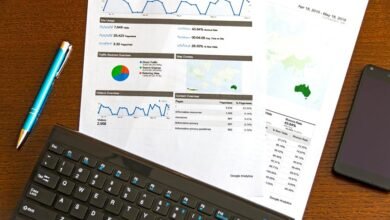
Operational Efficiency Dashboard Across Industries: 508037514, 922071085, 697455520, 1525218704, 213245600, 623497115


Operational efficiency dashboards serve as critical tools across various industries, offering a structured approach to monitor and enhance performance metrics. They provide organizations with the ability to visualize data, pinpoint inefficiencies, and streamline operations. The impact of these dashboards is particularly pronounced in sectors like manufacturing and healthcare. As organizations strive for continuous improvement, the question arises: how can these tools be optimized to meet evolving operational goals?
Understanding Operational Efficiency Dashboards
Operational efficiency dashboards serve as critical tools for organizations aiming to streamline processes and enhance productivity.
Effective dashboard design incorporates data visualization techniques that transform complex metrics into intuitive displays. By providing real-time insights, these dashboards empower stakeholders to make informed decisions, identify inefficiencies, and allocate resources strategically.
Ultimately, they foster a culture of continuous improvement, enabling organizations to achieve their operational goals.
Industry Applications of Operational Efficiency Dashboards
While many industries face unique challenges, the application of operational efficiency dashboards remains a common strategy for enhancing performance across diverse sectors.
Manufacturing insights are streamlined through real-time data analysis, optimizing production processes.
In healthcare, analytics empower providers to improve patient outcomes and resource allocation.
Ultimately, these dashboards facilitate informed decision-making, driving efficiency and fostering an environment conducive to continuous improvement.
Case Studies Highlighting Success Stories
As organizations increasingly adopt operational efficiency dashboards, several case studies illustrate their transformative impact across various sectors.
Notably, businesses that prioritize success metrics during dashboard implementation report significant improvements in resource allocation and decision-making processes.
These case studies highlight how tailored analytics foster strategic insights, enabling organizations to enhance productivity and achieve operational goals while maintaining a focus on continuous improvement and adaptability.
Key Performance Metrics for Monitoring Efficiency
How can organizations effectively gauge their operational efficiency? By utilizing efficiency metrics and performance indicators, companies can systematically analyze productivity, resource allocation, and process effectiveness.
Key metrics such as cycle time, throughput, and cost per unit provide actionable insights. Regularly monitoring these indicators allows organizations to identify inefficiencies, streamline operations, and ultimately enhance overall performance, fostering a culture of continuous improvement.
Conclusion
In the tapestry of modern industry, operational efficiency dashboards emerge as vibrant threads weaving together data and insights. They illuminate pathways to enhanced productivity, revealing inefficiencies like shadows in the light. As organizations harness these tools, they transform their operations into finely tuned machines, driving strategic decisions that echo across the landscape of performance. The case studies serve as beacons, showcasing the profound impact of these dashboards and inspiring a relentless pursuit of excellence in every sector.